
Lavazza’s Roadmap to Sustainable Coffee Packaging

Updated: Dec 8, 2025
Lavazza’s journey toward sustainable coffee packaging began decades before “recyclable” became a buzzword. The Italian coffee brand has consistently invested in innovation to balance performance, freshness, and sustainability—turning one of the most challenging packaging formats, coffee flexibles, into a model for circular design.
From Metal Cans to Monomaterials
The story starts in 1948, when Lavazza patented its first metal coffee can, a durable solution designed to preserve freshness. By 1971, the brand revolutionised retail coffee with its vacuum pack for Qualità Rossa, which extended shelf life and became an industry benchmark.
Fast forward to the 2020s, Lavazza began addressing one of the biggest challenges in coffee packaging: multi-material laminates that combined plastic and aluminium, making them nearly impossible to recycle. In 2020, the company launched its first soft pack without aluminium foil, followed by improved barrier versions in 2021. By 2022, Lavazza had developed monomaterial polyethylene (PE) structures, and in 2023, extended this innovation to whole-bean packaging without aluminium. In 2024, the shift continues with monomaterial polypropylene (PP) vacuum packs, designed to enter existing recycling streams across Europe.
Looking ahead, Lavazza’s 2025–2030 roadmap is fully aligned with the EU Packaging and Packaging Waste Regulation (PPWR), setting the stage for a new era of compliance and circularity.

Challenges and Innovations
Transitioning to recyclable, high-performance flexibles was far from simple. Lavazza identified key challenges across the value chain:
Ecodesign: Developing high-barrier monomaterials that maintain coffee freshness while meeting evolving recyclability guidelines.
Effective Recyclability: Conducting real-world testing to confirm that the designed-for-recycling packs are compatible with existing sorting and recycling systems.
Packaging Lines: Upgrading and fine-tuning manufacturing lines to process new monomaterial structures efficiently.
Regulatory Readiness: Anticipating the PPWR requirements by embedding compliance into packaging design.
Despite these complexities, Lavazza views this transition as an opportunity to drive circularity, reduce CO₂ emissions, and minimise packaging mass—without compromising quality or shelf life.
Quantifying the Impact
The results of Lavazza’s packaging transformation are already tangible:
40% reduction in CO₂ emissions from primary flexible packaging.
81% of packs recyclable by the end of 2024.
€25 million investment to revamp and expand packaging lines (11 new and 12 converted).
Proactive action to ensure full alignment with the EU’s PPWR well before enforcement deadlines.
The Four Pillars of Sustainable Design
Lavazza’s packaging strategy is built on four interconnected pillars:
Low Environmental Impact: Removing aluminium layers to cut the carbon footprint.
Material Reduction: Balancing protection and efficiency through lightweighting.
Low-Impact Resources: Integrating recycled and responsibly sourced materials.
Meaningful End-of-Life: Designing for reuse, recyclability, or compostability via monomaterials.
Progress is tracked through clear KPIs—including carbon footprint, mass ratio, circularity index, and recyclability rate—ensuring that every change delivers measurable results.
Learnings and Next Steps
The company’s biggest takeaway? Sustainability is a team effort. Lavazza has built strong collaborations with material suppliers, converters, and recyclers to co-develop viable solutions. Internally, the company emphasises training and engagement across departments, ensuring sustainability isn’t a side project—it’s part of the culture.
Monitoring evolving regulatory frameworks and recyclability standards remains fundamental, as does continued investment in new lines and R&D. Lavazza recognises that transforming flexible coffee packaging requires working across the whole process—from design to infrastructure adaptation.

Conclusion
Lavazza’s packaging evolution shows that meaningful progress comes from long-term vision and technical precision, not short-term fixes. By eliminating aluminium, redesigning structures, and investing in circular systems, the brand is proving that tradition and innovation can coexist—brewing a more sustainable future for coffee, one recyclable pack at a time.
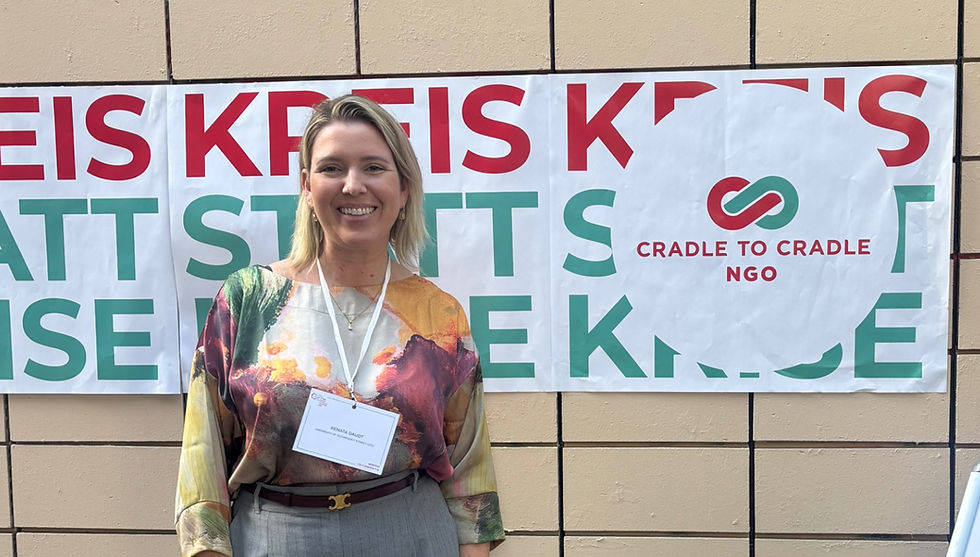
This information was presented by the Sustainable Packaging Specialist from Lavazza Group during the Sustainability in Packaging Conference, held in Barcelona in October 2025. The presentation offered an in-depth look at Lavazza’s decade-long transformation toward recyclable, monomaterial coffee packaging and its preparation for the upcoming EU PPWR.

Comments