
Your PPWR Questions answered

The EU Packaging and Packaging Waste Regulation (PPWR) has been applicable since 12 August 2026, introducing new compliance obligations for businesses placing packaging on the European market.
During our recent webinar, we discussed what these requirements mean in practice, from packaging minimisation and recyclability to recycled content, supplier responsibilities and the EU Declaration of Conformity.
One thing became clear from the questions raised: businesses are still trying to understand not only what the regulation requires, but also who is responsible, what evidence is needed and when each obligation applies.
I've brought together some of the most frequently asked questions from the webinar, with practical answers and references to the relevant PPWR articles and annexes to help you navigate the requirements.
This article is for general information and does not constitute legal advice.
Do the PPWR guidelines apply to both B2B and B2C packaging?
Yes. The PPWR applies to packaging placed on the EU market, including business-to-business and business-to-consumer packaging, subject to any specific provisions or exemptions. Since 12 August 2026 this includes conformity assessment and an EU Declaration of Conformity for transport packaging (for example pallets, wrapping and straps), not only consumer sales packaging. Some obligations differ by packaging type: the harmonised sorting label will not apply to transport packaging other than e-commerce packaging, while the 2030 reuse targets fall mainly on transport and grouped packaging used B2B. However, “manufacturer” and “producer” are different legal roles. The manufacturer is responsible for packaging conformity and the EU Declaration of Conformity; the “producer” is the entity identified under the PPWR’s territorial EPR rules and may be a manufacturer, importer or distributor depending on how and where packaging is first made available. The Commission’s Guidance stresses that there is only one manufacturer per packaging unit across the EU, whereas producer status must be assessed separately in each Member State where the packaged products are made available. A brand owner that fills purchased empty packaging is not automatically the EPR producer in every Member State. Map the supply chain and sales arrangements country by country before assigning registration and fee obligations. (PPWR Article 2; Article 3(1), definitions of “manufacturer” and “producer”; Articles 15–16, 21 and 44–45; Article 12 for labelling scope; Article 29 for reuse targets).
How will packaging minimisation be assessed and enforced?
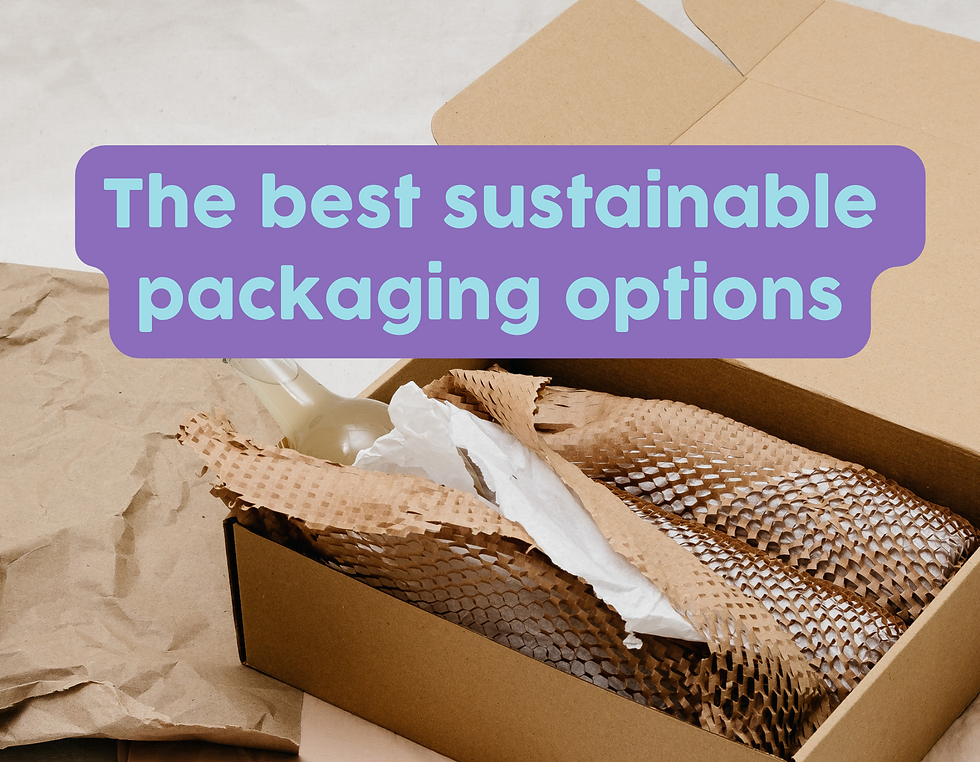
Two separate rules are often confused. Article 10 requires packaging weight and volume to be reduced to the minimum necessary for functionality by 1 January 2030, assessed against the performance criteria in Annex IV and supported by technical documentation. Packaging designed merely to increase perceived product volume, such as unnecessary layers, false bottoms or double walls, is specifically addressed, subject to defined exceptions. Separately, Article 24 sets a maximum 50% empty-space ratio for grouped, transport and e-commerce packaging filled by economic operators, applicable by 1 January 2030 or three years after the relevant calculation-method implementing act enters into force, whichever is later. Fillers such as bubble wrap, air cushions, foam and paper void fill count as empty space for that calculation, and sales packaging that is also used as e-commerce packaging falls outside the Article 24 ratio. The 50% threshold is not a general limit on the empty space inside every retail sales pack. Assessment and enforcement will depend on the relevant legal requirement, methodology, documentation and national market-surveillance authorities. Until a harmonised standard is cited, the Commission points to EN 13428:2004 (the existing minimisation standard, which is due to be updated) as the practical reference, and stresses that minimisation must be assessed for the specific packaged product rather than in the abstract. (PPWR Article 10 and Annex IV; Article 24 for the empty-space ratio).
What standard determines whether packaging is recyclable under PPWR?
The PPWR establishes its own design-for-recycling framework under Article 6. The Commission must adopt delegated acts defining design-for-recycling criteria and performance grades by packaging category. RecyClass and existing EN standards can support preliminary technical assessments, but neither is automatically the official PPWR grading methodology. The general requirement that all packaging placed on the market be recyclable (Article 6(1)) has applied since 12 August 2026. Until the design-for-recycling criteria apply, the Commission indicates that the recyclability requirement of the former Packaging Directive, assessed with EN 13430:2004, remains the reference and that recyclability need not yet form part of the formal conformity assessment; EN 13430 does not, however, give a presumption of conformity under the PPWR. The graded rules then apply in stages: the design-for-recycling delegated acts are due by 1 January 2028; from 1 January 2030 (or 24 months after those delegated acts enter into force, whichever is later) packaging must reach at least grade C; from 1 January 2035 it must also be recycled at scale; and from 1 January 2038 grade C packaging may no longer be placed on the market. The grade bands specified in Annex II are A ≥95%, B ≥80% and C ≥70% (the relevant recyclability assessment score); below 70% is not considered recyclable under that grading system. The methodology, packaging categories and any applicable exceptions must be checked against the adopted secondary legislation. Article 6 also lists exemptions, for example immediate packaging for medicinal products, contact-sensitive plastic packaging for medical devices, and lightweight packaging made of wood, cork, textile, rubber, ceramic, porcelain or wax. (PPWR Article 6 and Annex II, including Table 3; Commission Guidance C/2026/3084 on the interim reference).
Does the Declaration of Conformity (DoC) need to be submitted to a regulator?
The PPWR does not establish routine advance filing of every EU Declaration of Conformity with a central regulator. The manufacturer must draw up the DoC, keep it up to date and make it available to competent authorities upon request, supported by the technical documentation. This obligation has applied since 12 August 2026 to all packaging types, including transport packaging, and the manufacturer may issue either a single DoC or a dossier of individual DoCs. A DoC is a legal conformity document, not merely a document to prepare if somebody asks for it. Importers and distributors have verification and cooperation duties, and market-surveillance authorities can require evidence and take proportionate corrective measures, including restrictions, withdrawal or recall where justified. Customs and market-access consequences depend on the circumstances and applicable enforcement procedures; they are not automatic penalties for every missing document. (PPWR Articles 15, 18–19 and 38–39; Annexes VII–VIII; market surveillance and import controls under Regulation (EU) 2019/1020, as amended by the PPWR).
How do you calculate the proportion of materials in mixed packaging?
First identify the relevant packaging unit and each component or material, then record verified masses (in grams). For a simple mass-share calculation, divide the mass of the material in question by the total mass of the relevant packaging unit and multiply by 100. However, do not assume that one generic plastic-weight calculation determines every PPWR obligation: composite-packaging classification, recyclability, EPR reporting and recycled-content requirements may apply different definitions and calculation rules. Article 7(5)(b) exempts a plastic part representing less than 5% of the total weight of the whole packaging unit from the minimum recycled-content percentages; this is a strict “less than 5%” threshold, not “5% or less”. Labels and coatings must be classified according to the applicable rule rather than automatically treated as a single separate plastic component. For composite-packaging classification, labels, closures and sealing are disregarded, and a material that is only an insignificant part of the unit, and no more than 5% of its total mass, does not make the unit composite. An annulment action challenging Article 7(5)(b) has been brought before the General Court (Case T-243/25); the exemption applies unless and until it is annulled. (PPWR Article 7(5)(b) for the less-than-5% exception; Articles 3, 6 and 7 and recital 13 for applicable definitions and assessment rules).
Does packaging need to be both recyclable and contain recycled content by 2030?
For most plastic packaging, yes; for other materials, only the recyclability requirement applies. Not every packaging material is subject to a mandatory recycled-content percentage. Article 6 establishes recyclability requirements for packaging, with the 2030 start date subject to the timing of the delegated acts and specified exemptions. Article 7 sets minimum post-consumer recycled-plastic content for applicable plastic parts of packaging, with the start date being 1 January 2030 or three years after the relevant calculation and verification implementing act enters into force, whichever is later. The 2030 percentages are 30% for contact-sensitive PET packaging (excluding single-use plastic beverage bottles), 10% for other contact-sensitive plastic packaging (excluding those bottles), 30% for single-use plastic beverage bottles and 35% for other plastic packaging. From 1 January 2040 these rise to 50%, 25%, 65% and 65% respectively. These categories are based on use and regulatory definitions, not simply on whether the resin is PP or HDPE. Only post-consumer recycled plastic counts; post-industrial scrap or regrind does not. Exemptions and calculation at manufacturing-plant/year level must be considered. Exemptions include compostable plastic packaging, immediate packaging of medicinal products, contact-sensitive packaging of medical devices, and packaging whose plastic part is less than 5% of the unit’s total weight. (PPWR Article 6 and Annex II for recyclability; Article 7, particularly paragraphs 1–2 and 4–6, for recycled-plastic content).
Am I classified as a manufacturer if I supply empty packaging to a brand?
Possibly. Under Article 3, a manufacturer can be the person who manufactures packaging or a packaged product. Where packaging or a packaged product is designed or manufactured under another party’s name or trademark, that party generally qualifies as the manufacturer, subject to a specific micro-enterprise exception. The Commission’s rule of thumb is that the party whose name or trademark appears on the packaging usually qualifies as its manufacturer, and there is only ever one manufacturer per packaging unit. Accordingly, an empty-packaging supplier is not automatically excluded from being a manufacturer, and the filling operation alone does not determine who is the manufacturer. Identify who markets the packaging or packaged product under whose name or trademark, assess any exception and allocate duties contractually. Suppliers have a separate obligation to provide manufacturers with the information and documentation necessary to demonstrate conformity, but this duty does not shift legal responsibility for conformity away from the manufacturer. Under Article 21, an importer or distributor also takes on manufacturer obligations if it places packaging on the market under its own name or trademark, or modifies packaging in a way that may affect compliance. (PPWR Article 3(1), definition of “manufacturer”; Articles 15–16 for manufacturer and supplier obligations; Article 21 for importers and distributors treated as manufacturers).
How detailed do packaging material specifications need to be, and does EU customs check for a Declaration of Conformity?
The DoC follows the model structure in Annex VIII and contains the required identifying information, applicable legislation, conformity statement and signatory details. The underlying technical documentation is much more detailed: Annex VII requires an adequate description of the packaging, relevant design and manufacturing information, explanations of how the applicable requirements are met, assessments, supporting calculations, standards or technical specifications used, and relevant test or other evidence. Any exemption relied on must also be documented in the technical documentation, and the Commission’s FAQ expects transport packaging (for example pallets, pallet collars, wrapping and straps) to be assessed and declared by type. Material composition, component weights, substances and supplier declarations should be sufficiently traceable to support the particular claims made. There is no general requirement to submit every DoC at the border as a standard customs clearance attachment, but customs and market-surveillance authorities may intervene or request information under applicable procedures, including the controls on products entering the Union market under Regulation (EU) 2019/1020. A fixed two-page length is not prescribed. (PPWR Articles 15 and 38–39; Annex VII for technical documentation and conformity assessment; Annex VIII for the DoC model).
Can we create our own version of the Declaration of Conformity instead of using a template?
Yes, a business may apply its own branding and layout, but the DoC is not free-form. Article 39(2) requires it to follow the model structure in Annex VIII and contain the information specified by Annex VII’s conformity-assessment module. It must be continuously updated and drawn up or translated into the language(s) required by the Member State(s) where the packaging is placed or made available on the market. An internal template should therefore reproduce every mandatory field and permit identification of the packaging covered, the manufacturer and the responsible signatory. A single DoC may cover several packaging items, but it should clearly distinguish the packaging from the packaged product. Legal review can be useful but does not replace the underlying technical conformity assessment. (PPWR Article 39 and Annex VIII; Annex VII for the conformity-assessment procedure).
How often does PPWR documentation need to be updated?
There is no single annual update rule for every PPWR document. The DoC must be kept continuously up to date; the technical documentation and conformity assessment should be reviewed when packaging design, materials, suppliers, applicable rules or supporting evidence change in a way that may affect compliance. Manufacturers must retain technical documentation and the DoC for the relevant statutory retention period (5 years after placing on the market for single-use packaging and 10 years for reusable packaging). Separately, EPR registration, data reporting and fee payments follow applicable PPWR and national requirements, often with annual reporting cycles. According to the Commission’s FAQ, the first PPWR-harmonised reporting period to national producer registers is expected to cover calendar-year 2028 data, reported by 1 June 2029; existing national EPR reporting continues in the meantime. EPR fees may be modulated according to prescribed criteria, but the example material-specific euro fees in the original draft are not EU-wide PPWR rates and should not be presented as such. (PPWR Article 15(3) for retention and Articles 15 and 39 for documentation; Articles 44–45 for EPR, alongside applicable national reporting rules).
"PPWR compliance is an ongoing process, not a one-off exercise."
Although the Regulation has been applicable since August 2026, several important requirements will be phased in over the coming years, with further technical criteria and implementing legislation still to come.
For businesses, the priority is to understand which obligations apply to their packaging, establish reliable supplier documentation and start assessing packaging designs against upcoming requirements rather than waiting until the next deadline.
At AWEN Packaging Consulting, we work with businesses to translate these regulatory requirements into practical packaging assessments, compliance documentation and strategies for the European market.
Still have questions about how PPWR applies to your packaging? Get in touch with us. We're happy to help you understand your obligations and prepare for what's next.

Comments